
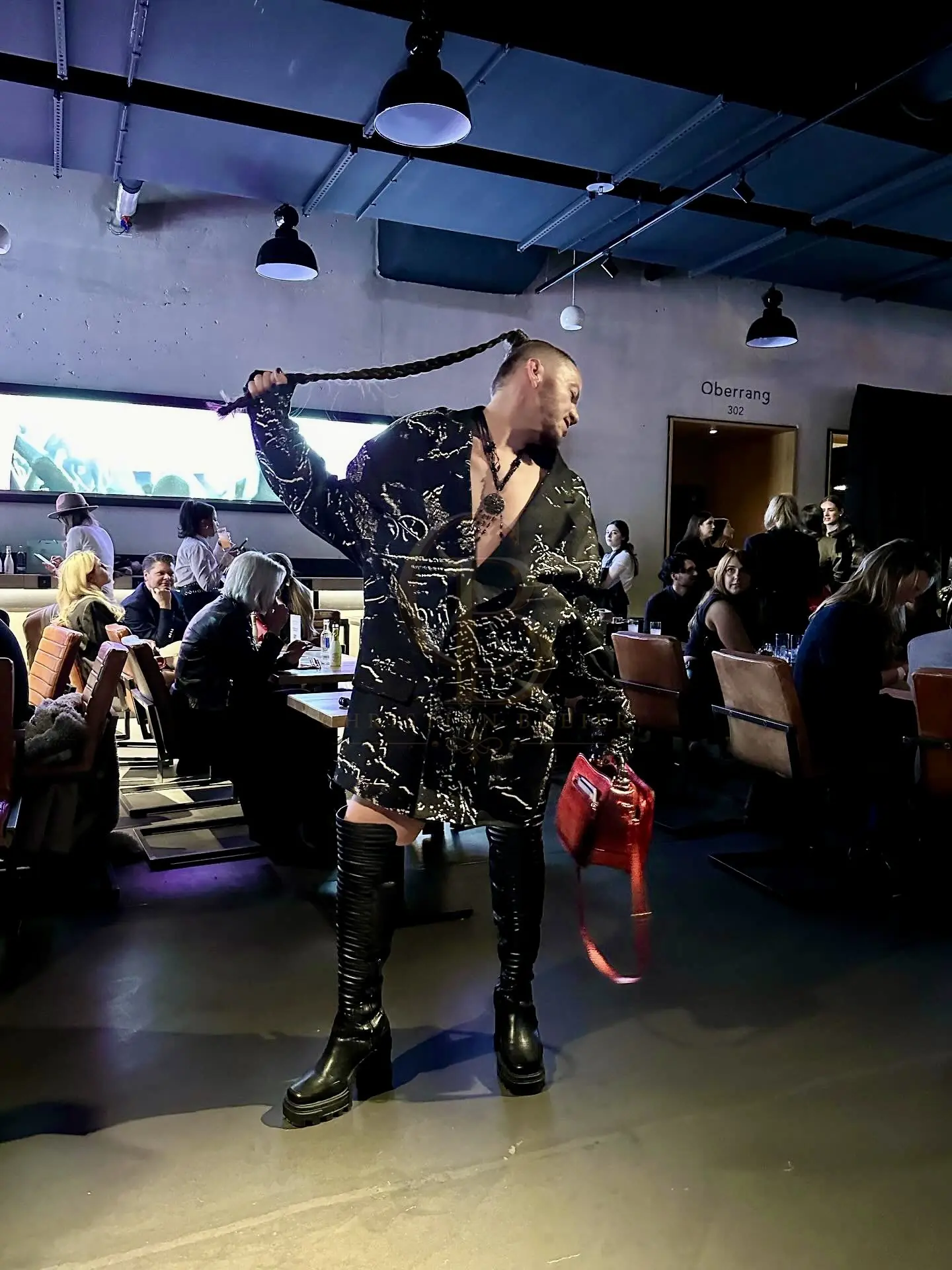
For me, fashion has never been only about what we wear. It speaks of our personality, our beliefs and how we position ourselves in a world full of expectations. Sometimes an extraordinary cut, an unexpected silhouette or a single accessory is enough to express more than words ever could. Fashion has a special ability to make identity visible, question social conventions and connect people across cultural boundaries. At a time when trends appear and disappear almost by the minute, another question is becoming increasingly important to me: what remains of our style when we stop trying to please others?
The silent language of fashion
A garment can tell a story before its wearer even enters the room. It can convey confidence, express restraint or deliberately break with expectations. Fashion is a visual language with almost limitless possibilities for expression. Its fascination lies not only in aesthetics, but in the personality it reveals.
Through my work as an international fashion and lifestyle content creator, influencer and ambassador, I have experienced how differently this language is interpreted. What is considered avant-garde in Berlin may already be commonplace in another fashion capital. A silhouette that provokes today may become part of a new design movement tomorrow. These cultural differences are precisely what make fashion so extraordinary to me. They remind us that beauty and style follow no universal rules, but are always shaped by background, experience and personal perception.
Clothing has no gender. Style needs no permission.
The idea that certain garments should be reserved exclusively for men or women seems increasingly outdated to me. Why should a skirt automatically be feminine? Why are colours, fabrics or silhouettes still assigned to particular genders? Fashion history is, after all, also a history of social change. What was taken for granted in one era was questioned, reinterpreted or entirely dismantled in another.
“Fashion is a language without words. Clothing has no gender.”
For me, this attitude is much more than a fashion statement. It represents the freedom to express yourself independently of social labels. International designers repeatedly show how fascinating fashion can become when traditional categories lose importance. Flowing fabrics meet striking cuts, classic tailoring meets experimental forms. Individuality does not have to be loud. A perfectly cut black suit can be just as expressive as an elaborate couture creation. What matters is not how conspicuously someone dresses, but how naturally they wear their own style.
Between individuality and the aesthetics of the algorithm
Fashion has never been as visible or as fast-moving as it is today. Digital platforms allow creative people to share their ideas with a worldwide audience. Inspiration is always available; trends spread across continents within hours. But this development has another side: while individuality is celebrated, aesthetics amplified by algorithms often produce a remarkable uniformity.
Personal style, however, cannot be defined by reach or by how quickly someone adopts new trends. It develops over years, changes through experience and grows with every new encounter. My own view of fashion is constantly evolving too. International events, conversations with designers and encounters with different cultures broaden my aesthetic horizons. Not every trend needs to enter my wardrobe, and not every collection has to suit my taste. Far more important is a willingness to welcome new perspectives without losing sight of your own identity.
What the runway tells us about society
Those who see fashion weeks solely as a succession of spectacular shows miss an essential part of their significance. Behind the staging, the carefully composed looks and presentations that often last only a few minutes are creative visions, cultural influences and personal stories. The runway becomes a place where clothing is not only presented, but social questions are also explored.
My experiences at international fashion weeks have profoundly shaped my understanding of these connections. Designers, models, photographers and journalists meet with different ideas of beauty, identity and artistic expression. Some collections preserve traditional craftsmanship; others engage with current social developments or deliberately question existing conventions. Designs that initially unsettle us can be particularly interesting. They challenge us to move beyond familiar ways of seeing and judge fashion on more than whether we would wear it ourselves.
For me, this is one of the industry’s greatest strengths: fashion can make cultural differences visible without necessarily separating them. It can provoke, spark discussion and bring together people whose lives could hardly be more different. Sometimes a remarkable conversation begins with nothing more than an extraordinary garment.
The beauty of imperfection
The international fashion world thrives on images: carefully staged campaigns, striking runway moments and an aesthetic often considered down to the smallest detail. This visual perfection is part of the industry’s fascination. Yet it rarely tells the whole story. Behind every collection are people who experiment, question decisions, take risks and realise their ideas despite resistance.
These are the stories that interest me. As a content creator, influencer and fashion editor at frame discover, I want to show fashion as more than a luxurious surface. I am interested in the personalities behind the designs, the creative processes and the convictions that produce exceptional work. A spontaneous backstage conversation can sometimes reveal more than a perfectly choreographed presentation. A personal story can give a collection meaning that extends far beyond its visual impact.
For me, authenticity is therefore not opposed to elegance, but one of its most convincing forms. An extraordinary outfit may attract attention. What people actually remember is often the personality wearing it.
The freedom to be yourself
Perhaps the true meaning of fashion lies precisely in its resistance to a final definition. It changes with society, absorbs cultural influences and creates room for new interpretations. At the same time, it remains something deeply personal. Nobody has to follow every trend, question every convention or make a social statement through their style. Sometimes individuality simply means consciously choosing what feels right.
For me, fashion means freedom. The freedom to question expectations, embrace change and make your personality visible. Whether minimalist or extravagant, classic or avant-garde, style should never depend on whether others understand or accept it.
Because fashion is a language without words. And everyone should have the freedom to tell their own story through it.